The cost of excellence: hospitality’s workplace culture question
Published 2 July 2026
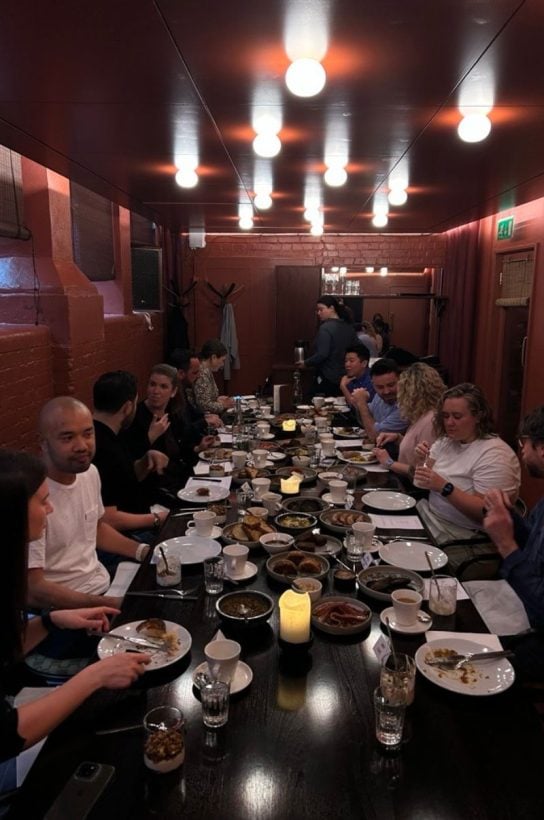
Workplace culture has become one of hospitality’s biggest talking points over the past year. Stories of toxic environments and difficult leadership have prompted an industry-wide conversation about what needs to change. But while much of the discussion has focused on what’s gone wrong, we wanted to hear from the people responsible for getting it right.
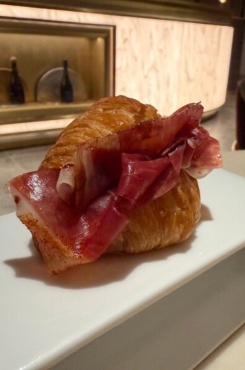
Over an Indian-inspired breakfast of sesame cruffins, vanilla shrikhand and eggs bhurji at Kricket in Shoreditch, CODE Hospitality, in partnership with Planday, brought together a group of hospitality leaders working across operations, HR, finance, people and culture to discuss what healthy workplaces actually look like in practice.
From embedding company values and creating psychological safety to the role of technology, AI and accountability, one message came through clearly: workplace culture isn’t built through mission statements or policies alone. It’s created by the decisions leaders make every day.
In attendance:
Moncef Mansour, Head of People, Kricket Group
Tiffany Robinson, HR Manager, Major Food Group
Trieu Luu, Head of People, Tonkotsu
Patrick Campbell, Head of People Operations, Ardent Pub Group
Nick Blake, Finance Director, Studio Paskin
Sara Casanova, Cluster People and Culture lead, Canopy by Hilton London City and The Westin London City
Darryl Chan, Head of Learning and Sustainability, Harts Group
Sarah Haddon, VP of Regional and Partnerships, Planday
Culture isn’t what you say – it’s what you do
“You’ve got to be really clear about your company values and what they represent. Make sure they are being lived and breathed across the business and they’re not just three words on a lanyard or an office wall somewhere. You have to embed your values into every single step of the employee journey from recruitment to onboarding through to ongoing learning and development, making sure you are benchmarking people’s skillset against those values.” Darryl
The biggest test of culture comes when times get tough
“What I find challenging right now is we talk about how great our culture is and we’re proud of our culture, but in this climate, [it is challenging] for anybody to make any money. How transparent are you with frontline teams? How do you get them to believe what you promised them is 100% reflected day to day? Financial stability is number one for all of us. If you’re going through challenging periods, which we’ve all been going through for quite a long time, how do you convince [your team] that the culture matches what we live and breathe.” Moncef
Is it a strong workplace culture or is it a cult?
“It’s such a fine line between defining somewhere as a strong workplace or somewhere that’s actually very culty. You can be attracted by a founder with a magnetic personality but then you see they surround themselves with people who just say ‘yes’ to them all the time. Having a difference of opinion is really important to creating a healthy work culture and saying to people ‘please do challenge if you don’t agree with what is being said’ because otherwise it just becomes a dictatorship, it just becomes a cult. Having differences of opinion is really important to creating a healthy work culture. It’s saying to people like, ‘please do challenge if you don’t agree with what is being said’, because otherwise it just becomes a dictatorship. It just becomes a cult”. Darryl
Culture is defined by what leaders are willing to tolerate
“You need to show, especially when those people doing wrong things or different things to everybody else are in leadership or even in ownership, that your practices on paper are robust and that they have teeth. That’s the moment that you have to act and act straight away. That’s the moment that you set the culture. If you sweep it away, culture’s not even something worth discussing.” Patrick
Psychological safety is key to workplace happiness
“The benefit of a bigger business, is that you can have two or three people that people feel they can go to [if they have a problem], because often there’s only one person in a small business, and because it’s a small business, they might be quite close to the owner or the problem maker. And that’s just going to be a pointless conversation which might leave you vulnerable afterwards.” Patrick
The best workplace tech gives people permission to switch off
“I know for myself I could never fully relax [away from work]. I had to build a business case for bringing an alternative to WhatsApp in but the moment we did so, it was like a lightbulb moment from top to bottom. It’s limited all the emails.” Moncef
AI tools are giving rise to an increase in formal complaints
“Part of me kind of enjoys that in a way because it means the team are starting to really understand what can and can’t be done. The thing that I’ve kind of seen in the last year is newer people coming into hospitality are actually holding employers accountable, which, for me, is great. I love it. If someone is doing something that is not right, they are challenging that; which then makes it easier, from my point of view, to say, well, we should be doing that anyway.” Tiffany
AI tools can be empowering
“Sometimes with language barriers, sometimes prevents people from speaking up and raising something that is actually fair to raise. AI can sound like a threat every single time but if it gives someone the courage to speak up, it can be a really good thing.” Trieu
Investing in people isn’t a luxury – it’s a business strategy
“Investing in your people, your team, your culture, is something that, in the environment we’re in now, is quite hard because everyone’s always talking about how do we save money? The way we’re trying to look at it is, yes, it is a cost, but it’s something that’s essential right now to make it that people want to work for you, that people want to come and dine with you. So it’s trying to think slightly longer term, which isn’t always the easiest thing to do. Our team are everything about what we do, whether it be cooking the food, whether the service you get, everything else. Like if they’re not engaged and happy with what they’re doing, people know. And that’s not sustainable.” Nick
Long-term success is a positive story
“B Corp was a big thing for us because we were talking about purpose and our mission. Money was almost a toxic conversation but ultimately B Corp are really interested in your financial stability, because they want you to be around for 20, 30 years. We’ve got parents in the business so we talk about the importance of providing for their kids in 20 years and make money-making a positive thing, I suppose? The long-term success of the business is a positive story to tell everyone, whether they’re a waiter or a general manager.” Patrick
Not every workplace suits every person
“We try different trial shifts in different venues and tell people that if one environment doesn’t feel right, that doesn’t mean hospitality isn’t right for you—it just means we haven’t found the right fit yet. Giving people that space means they’ll end up in an environment where they thrive.” Darryl
The new generation of leaders wants to make changes
“I think we’re the generation who have worked really hard and you pay your dues and you get into the position that we’re all in now where you’re leading teams or building teams and you’re like, I’m not going to do that to anyone. And also, you don’t necessarily get the output that you’re promised. I think it’s a really interesting time from that perspective, where the people in the position of putting in policy and systems are like, why do that to the next generation?” Sarah
Gen Z isn’t the problem
“We’ve recently partnered with a university that has done research for us on Gen Z. We’ve got loads of Gen Z at the Westin and we wanted to understand their experience with us and how to build a bridge into management, because they are our future leaders. There are so many stereotypes towards Gen Z and I have them coming into my office, talking to the team, and, do you know what, they might have different expectations but they’re great works as well. They don’t seem to be understood. So it’s about more cultural awareness.” Sara
Hospitality shouldn’t shoulder every industry’s culture failings
“I can see why people outside the industry latched onto the [unpaid labour at Noma story]. I’m sure there were lots of [positive learning experiences] at Noma but everybody focusses on picking ants’ legs and all this stuff that makes a really good story. I think there were definitely issues in that restaurant, in terms of communication, and it sounds like lots of physical intimidation. That’s not good in any industry, but it’s unfair [to say] hospitality is the only industry doing that. I’m sure it happens in finance, care, everywhere.” Patrick