Why open a restaurant in today’s climate?
Published 23 July 2026

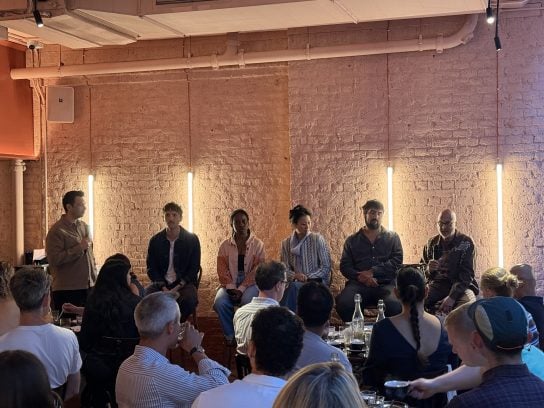
Why open a restaurant in today’s climate? This was the question we put to the five industry experts at our recent panel talk, in partnership with OpenTable, held over breakfast at Kricket in Shoreditch. Our panellists – Four Legs’ Ed McIlroy, The Latimer’s Jon Spiteri, Amy Poon of Poon’s at Somerset House, Chuku’s Ifeyinwa Frederick, and Kricket co-founder Rik Campbell – all had plenty to say on the subject. Read on for the edited highlights of the talk, moderated by Sasha Shaker, Senior Director of OpenTable in the UK and Ireland.
No perfect time
The panel agreed that waiting for the “right moment” is a mistake. Economic uncertainty brings challenges, but it also creates opportunities, from better lease deals to less competition. Success comes from backing your concept, staying adaptable and having the conviction to move forward. “If you’ve got a burning desire to do something, you’ve got an idea, you’ve got a concept, now’s as good as any time,” says Amy Poon.
Property market
Operators can now get in front of landlords who wouldn’t have taken a meeting with them a few years ago. They have more negotiating power and access to more flexible, flavourable lease terms. There are some great deals out there. “We’ve got more leverage now,” says Jon Spiteri.
First year
The first few months are for learning. Operators need time to refine the menu, understand their customers and respond to how the public shapes the business. Survival is the first measure of success. “My greatest fear was that we were going to be a hot restaurant,” says Amy Poon. “Because when you’re hot, you go cold. I just thought, can we just be a little bit tepid?”
Test first
Pop-ups remain one of the smartest ways to test a concept. They help founders build a community, refine the offer and reduce financial risk before committing to a permanent site. “You can risk being so close to your business that you think anything can work,” says Chuku’s Ifeyinwa Frederick. “For us, opening a pop-up at Boxhall has given us an opportunity to test our quick service format… We’ve done all of that learning but the risk is massively reduced.”
Know your guest
Understanding your customer has never been more important. The better operators know how, when and why people spend, the better they can shape their offer. “The sooner you get to know your guest, the better,” says Rik Campbell.
Sell an experience
Experiences are becoming increasingly important. “OpenTable data shows that we are seeing a steady increase year on year in demand for experiences,” says OpenTable’s Sasha Shaker. “So it’s no longer just about the meal. It’s about something special.” Even small changes can make a difference: Poon renamed her set menu an “experience” on OpenTable and saw sales increase.
Diversify
Restaurants need multiple income streams to improve resilience. Private dining, events, retail, delivery and complementary concepts all help spread risk, while flexible spaces can generate revenue throughout the week. “Think about how they complement each other,” advises Poon.
Spending habits
“Diners may spend less, they may eat less, they may not drink, but they’ll still come,” says Jon Spiteri. The challenge is giving people a compelling reason to choose your restaurant and making every visit feel worthwhile. “Trying to catch what people want is a full time job.”
Stay curious
Operators need to analyse data, learn quickly and continually adapt. “It’s kind of like a forensic obsession,” says Frederick. “I don’t think it should stop once you’re in a steady state because your business is constantly changing forever. We have to all be in our numbers, think about our offering, and constantly try to be better.”
Stand out
A clear concept and strong brand matter more than ever. Customers, investors and future growth all depend on people buying into what your business stands for, not just what’s on the menu. “There’s less room for figuring things out,” says Four Legs’ Ed McIlroy. “You have to hit the ground running. Customers are a lot less forgiving than they were five years ago.”
Offer value
Value doesn’t mean being cheap. It means giving diners different ways to spend. “Offering value is incredibly important,” says Kricket’s Rik Campbell. “That doesn’t necessarily mean to be cheap, but stretching your menu, offering opportunities for people to spend less, but also to spend more. You can still maintain average spend by doing that.” That work extends beyond the kitchen. “We never worked so hard in the background to drive value.”
Build a brand
Think beyond your first restaurant. “I’ve always been really clear that I want people to be falling in love with Chuku’s for what we represent,” says Frederick. “So that if we go on to do a bar, a quick service restaurant, a hotel, people will buy it because they know what Chuku’s is.”
Lean on partners
Technology providers can offer more than software. “We have all these apps that we use, POS systems etc, and I think now we can lean on those people,” says Spiteri. “We can go back to people and say, what could you do for us?”
Start small
“‘Minimum viable product’ is a term I learned off the tech people.” says McIlroy. “But it applies to anything. What’s the least we can do in order to get open and start making money? Then we can spend our money making this place better gradually.”
Trust your instincts
Finding the right site is part instinct, part practicality. “I walked in for the first viewing of The Plimsoll and sat there for eight hours in the dark, drinking with the landlord, and I was like, ‘This feels right’,” says McIlroy. He also values being able to visit all his restaurants and office in a single day.
Choose investors carefully
“The investment space is diverse and not all investors are equal,” says Frederick. “Don’t get caught in the optics of raising: just focus on what you need and who you really need it from.” Investors are backing founders as much as businesses, so confidence and conviction are everything. Remember, you’re doing something they can’t.
Raise what you need
“Bad money is worse than no money at all,” advises Amy Poon. Raise only what you need rather than chasing the biggest investment possible.
Tell your story
Strong storytelling is a competitive advantage. Campbell advises founders to define what makes their business unique, then tell that story consistently through photography and, more importantly, videography, using social media, including TikTok, to reach new audiences.