Call My Agent: How a New Generation of Chefs Are Finding Success Beyond the Pass
Published 13 November 2025
From pop-ups to brand deals and blockbuster book contracts, a new generation of culinary creators are redefining what it means to be a chef—often without a restaurant, but never without an agent. Ben McCormack speaks to the chefs and their agents carving out space in a changing industry.
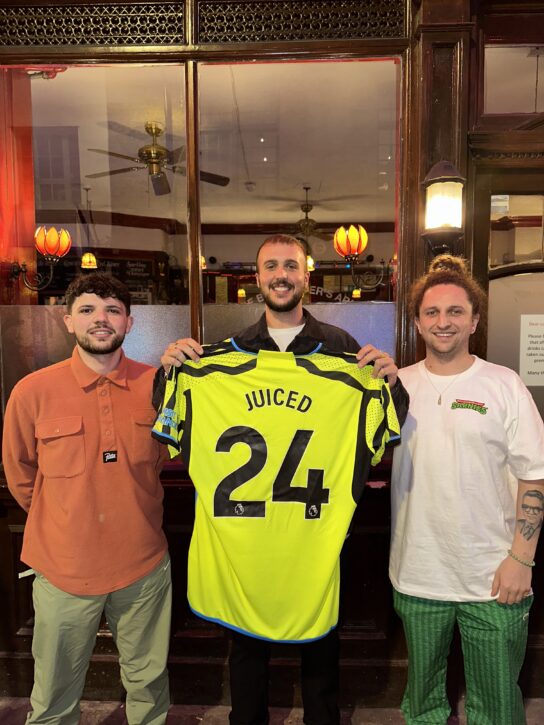
“I don’t think my job would be here if it weren’t for Covid,” says Nas Sherifi, the director and co-founder of Juiced, a food-focused talent and content agency. “So many people decided to bake a cake during lockdown, realised that was their passion and filmed a recipe video.”
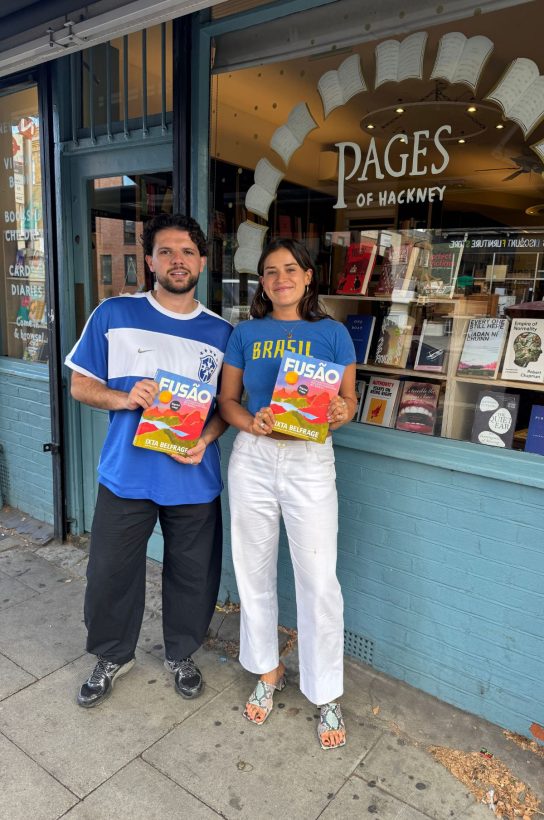
Sherifi’s flippancy masks a shrewd business mind. His seven clients (he says he wants to keep the business “as small as possible”) are a roll call of what he calls “the newer names on the block”: Ixta Belfrage, What Willy Cook, Alfie Cooks, Max Halley, Jordan Ezra King, Ben Lippett and Xiengni Zhou.
You may never have heard of them if you’re the sort of person who only eats tasting menus in fine-dining restaurants in Mayfair. But Sherifi this year helped negotiate a weighty six-figure book deal, led by literary agent Emily Barrett, for Alfie Cooks – “one of the biggest debut cookbook deals with a publisher ever.”
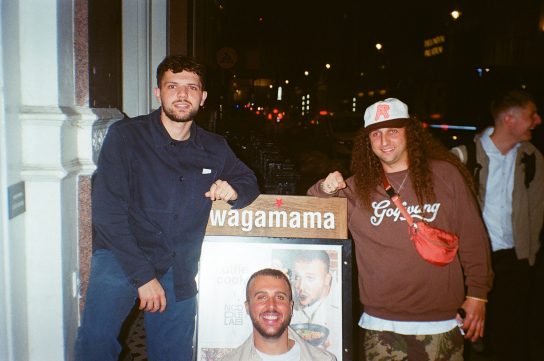
That came on the back of a year-long deal with Wagamama, which involved Alfie Cooks – real name Alfie Steiner, Instagram followers five million and counting – creating two dishes of firecracker ramen and crispy duckless pancakes, overseeing veg-led cooking lessons for kids, and making videos for his followers. Not bad for someone who, in Sherifi’s words, “is a home cook straight out of uni doing social content.”
Other Juiced clients have signed six-figure deals as long-term ambassadors for supermarkets. “And with that,” Sherifi says, “you’ve got the likes of Penguin knocking on the door saying ‘we want to do a book deal with this person because they can bring masses of engagement and exposure that can go global.’”
Sherifi’s credentials are top-notch. His CV includes 10 months as a chef de partie at Mangal 2 and two years as a talent manager with MOB Kitchen, the food media platform whose former senior food producer Ben Lippett signed what Sherifi says was the biggest debut cookbook deal before Alfie Cooks signed his. Cookbooks, however, are only part of the Juiced recipe. “Brand partnerships are our bread and butter,” Sherifi says. “That’s how 80 per cent of the people I represent make their money.” And Sherifi takes 20 per cent of that.
Picture a chef agent and one might not imagine the streetwear-clad Sherifi, who looks a decade younger than his 29 years. One might instead imagine Borra Garson, the immaculately groomed managing director of DML Talent who founded her agency in 1996 with the likes of Gary Rhodes and Jamie Oliver as clients. Now her roster includes not only fine-dining chefs Alex Dilling and Spencer Metzger, but also TikTok chef Dean Edwards and influencer Francesco Mattana, neither of whom cooks in a restaurant.
What has Garson learned about the world of the online-only chef? “To make it as an influencer there’s a whole set of rules and advice that are very, very different to the life of a chef in a restaurant,” she says. “You need to create a brand and persona and give people what they expect from you.” She says she has witnessed the growth of what she calls “a new layer of people within hospitality – people who are simply online cooks.”
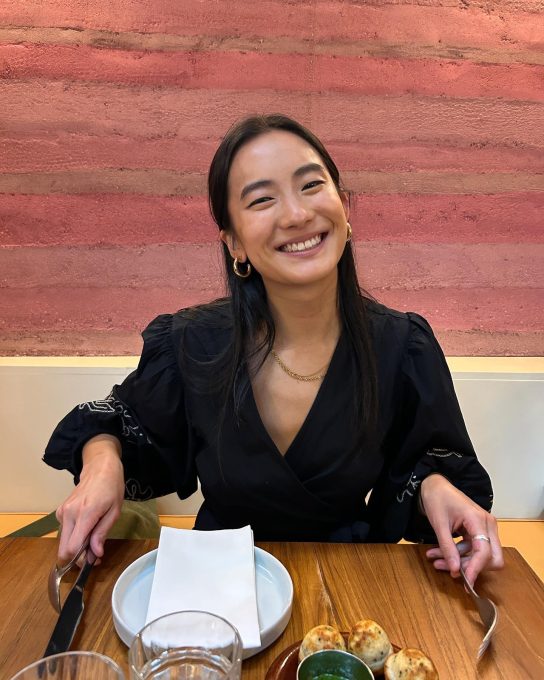
Yet even the job description of cook hardly seems to do justice to the skillset required to navigate the career path of today’s up-and-coming chef. Egle Loit worked in journalism and PR in her native Estonia before moving into branding and marketing. She started working in restaurants when she moved to London, and gained her Westminster Kingsway qualifications while working at Lurra.
Her debut restaurant, Darling’s Eatery, a pasta pop-up turned permanent, opened in East London in 2024. A scroll through the restaurant’s tastefully designed Instagram account reveals events by brands including ASOS, Peachy Den, and Mirror Water.
“It’s really important for me that behind of all of this I have a chef training,” Loit says. “Often when someone has a talent agent you don’t know if they’re someone whose cooking is actually good or it’s just content that looks cool.” Loit is signed with literary and talent agency Curtis Brown but says that many clients such as ASOS book her for events though her Instagram profile rather than through her agent.
Not every brand, however, is ASOS. Cellar Society is the fashion world’s favourite caterer, famous for choreographing events for clients including Christian Dior and Christian Louboutin, Versace and Victoria Beckham. “I could never, for instance, see a high jewellery brand hosting an event in an incredible venue and using a food curator,” founder Bertie de Rougemont says, suggesting that traditional chefs and trusted caterers still hold sway in many elite circles. “You need to use the right names that resonate with the right audience. But there is a space opening up for young chefs who have grown up learning about ingredients or worked in quite modest restaurants, who don’t necessarily have massive technical skills but who do have their own style. What’s interesting is that these young chefs who don’t even have a restaurant already seem to have an agent.”
Nobody could describe the restaurants that Diarmuid Goodwin has worked in as modest: sous chef at Café Murano, senior sous at Trullo, head chef at Sager and Wilde. But it was a career he describes as “a hamster wheel of constant turn and burn”; now he just does pop-ups and residencies.
When Goodwin was working at Sager and Wilde he was approached by a TV production company about appearing in a programme following Irish people in London, at which point he began working with his friend Emma Power, an agent at Curtis Brown. “Having an agent has introduced me to people within the media and brand partnerships,” Goodwin says. “Emma does all the negotiating for me that I don’t know how to do. I just know how to cook good food.”
“I can say yes to more things”
It has also, he says, allowed him the freedom “to say yes to more things”: testing products for SharkNinja, cooking at festivals, and working on a book on queer culture and food. Opening his own restaurant does not, for now, feature among his future plans.
“It’s very scary to have a restaurant these days,” Borra Garson says. But might the alternative be even more frightening? “Social media is cruel and fickle,” she agrees. “One wrong move and you’re toast. It’s a precarious place to work and it takes a very thick skin to survive the slings and arrows of comments when you’re exposing yourself to such a big audience.” The solution? Call your agent.
Ben McCormack is a freelance food, drink and travel writer and editor based in London. He writes for titles including Wallpaper, The Times, The Caterer, The Telegraph and Club Oenologique.