Samyukta Nair: “Hospitality requires a certain type of boldness”
Published 27 February 2026
By Hilary Armstrong
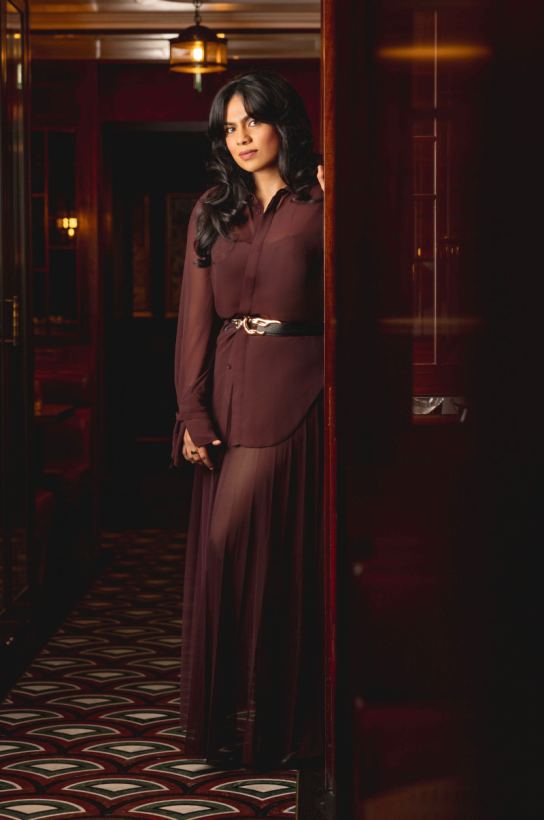
Samyukta Nair is the creative director and CEO of LSL Capital, the restaurant group behind Mayfair restaurants Jamavar, Nipotina, Bombay Bustle, and MiMi Mei Fair. In April, Nair will add a new name to that list – that of MIKO Mei Fair, a 50-cover Thai restaurant which will share the Georgian townhouse home of MiMi Mei Fair. The kitchen will be led by Soonthorn Apaipat, former head chef at KOYN Thai, who will cook KOYN Thai favourites such as Chiang Mai sausage and yellow crab curry, alongside new dishes like apple wood fire Peking duck Penang curry, a nod to MiMi Mei Fair’s signature whole roast duck. CODE caught up with Nair as she looks ahead to the new opening and reflects on what it takes to keep pace with the ever-evolving economic climate and restaurant scene.
Why did you decide to open MIKO Mei Fair?
“MIKO feels like a natural evolution. KOYN Thai was incredibly well received. We realised how much it resonated. KOYN Thai opened in 2024 as part of a pivot at KOYN. We introduced Thai to the subterranean dining room, and the serene restaurant on the ground floor became the Japanese restaurant. When the executive chef [Rhys Cattermoul] left to return to Australia with his family, we decided to close the doors because it’s very difficult to run two kitchens and such a large restaurant. Given where we were in the brand journey, without that expertise, it felt like the right decision. We always said it would come back. Now at MiMi Mei Fair, we see it as an opportunity to reframe the conversation and present it in a more intimate, design-led setting.”
Keeping our ear to the ground is at the forefront of all our endeavours. I am a Mayfair resident; I live in the area; and I really guide a lot of my decisions based on the behaviours of the community, how they dine, what they’re craving. The neighbourhood is shifting quite drastically so it’s important when you’re operating in a place like Mayfair, to really be attentive and agile, and for us that really meant being able to put forward a regional cuisine and give it that world-class platform.”
This isn’t the first time you’ve switched up the concepts at your restaurants. You did it at KOYN when you introduced KOYN Thai. It’s an unusual and bold approach. Does it come naturally?
“Flexibility isn’t about chasing trends. It’s about being really deeply attuned. If something can be refined and strengthened and reimagined to serve your audience better, I think that’s the responsible and the exciting thing to do because hospitality should be alive. It requires a certain type of boldness and a great team, for whom I’m really grateful.
No one saw the pandemic coming, and then we all had to pivot and deal with that. Then, post-pandemic, life has just not been the same, especially in England with all the changing conditions. We have to grapple with those changes pretty quickly. It’s very easy to feel deterred in an environment like this but I’ve looked at it with the lens of becoming more disciplined, more precise, more intentional. With those sorts of changes, if that is a pivot in the wider landscape that will help you, I think one must do it however daunting it might be.
We also have a commitment to our team. We had an entire Thai team who we had recruited; we thought it would be a pity to lose that talent.”
You operate in Mayfair. What are the challenges there?
“Mayfair has always been demanding and particularly of late. The wider landscape hasn’t been without pressures. You’ve got rising costs, sharper expectations, the pace of change that rarely slows. The audience that’s coming there wants to have a good time. It’s always been occasion-based; it’s always been fancy; it’s always been more demanding; but really in the last year and a half, I’d say, it certainly has felt a lot more daunting. However, for me, resilience is something that is important in our industry, because staying composed and staying curious and refining who you are without changing your core identity, is really important. And if you are agile while protecting the integrity of what you stand for, that’s really where strength lies. Knowing your audience is super, super important.
We’ve lost a large chunk of our audience. Brexit first had that big impact – that European leisure traveller, it just wasn’t there, and it formed a large part of our identity. And thereafter all the other changes that have led to a change in the customer profile; in consumer behaviour. I think also work from home didn’t really help us. The cost of living crisis. So there’s a myriad of factors that one has to consider. It has been compounding; it didn’t happen overnight.”
Thai food seems to be trending. What do you think you can bring to the market?
“I don’t think Thai food is a trend. I just think it’s really having a well deserved moment globally. The foundations for that were really laid a while ago. There were other offerings so I wouldn’t say that KOYN Thai was ahead of its curve but we were deliberate about not confining it to a stereotypical corner curry shop perception. We wanted to represent it with the same care and respect and design-consciousness that is afforded to other celebrated world cuisines. More importantly, Thailand is nuanced; it’s regionally diverse; it’s sophisticated; it’s emotionally generous. If you’ve been to Thailand today, the sophistication is undeniable. You’ve got tasting menus and chef-led counters, and seasonal cooking… That dining culture stands quite confidently alongside any major food capital in the world. It’s progressive, it’s polished, it’s globally conversant, and it’s still quite rooted because culturally they’ve got so many years of tradition that they bring forward. For us, it’s taking all those things and allowing the cuisine to stand tall and proud without apology or dilution is what’s exciting.”
MIKO Mei Fair, 55 Curzon Street, London, W1J 8PG.