Ikoyi’s Jeremy Chan: “I don’t enjoy fine-dining”
Published 27 March 2026
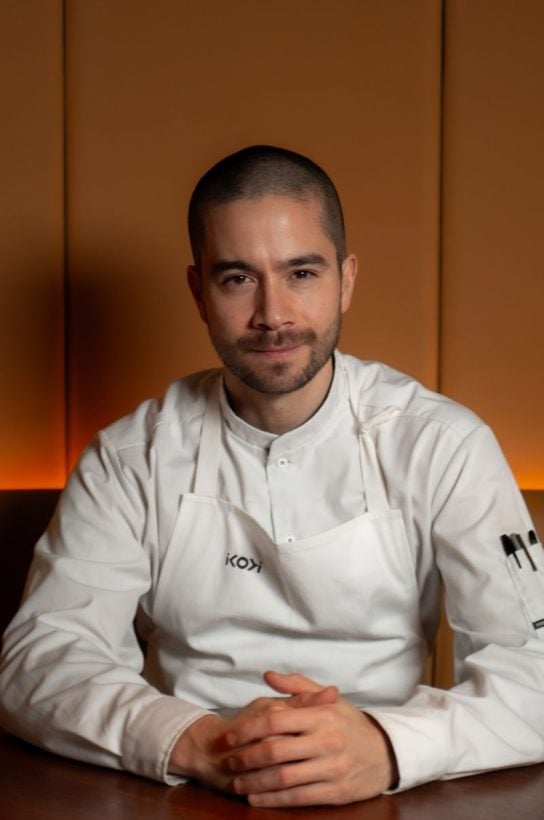
Magma Concepts is a new line of sauces and seasonings for the home cook born in the kitchens of Ikoyi, Jeremy Chan and Iré Hassan-Odukale’s two Michelin star restaurant in London. The brand’s first release, available to buy for just £10 via Magma Concepts from April, is Magma Hot Sauce, a condiment developed over two years using lacto-fermented chillies, citrus and a blend of two rare varieties of peppercorn. Executive chef Jeremy Chan tells CODE why he wants to get a taste of Ikoyi into our home kitchens.
By Hilary Armstrong
How did the idea for Magma Concepts come about?
We made this hot sauce at Ikoyi, maybe in our first year, 2017. We use it as a standalone product; we use it to season things. It’s more than just a hot sauce. It has umami flavour; sweetness; citrussy notes. It’s something that I always thought I’d like a lot of people to try outside of the restaurant.
When we opened Ikoyi, it was a different thing than it is today. Now it’s an experiential restaurant; it’s a special occasion place. Our audience is quite limited to those special occasions. Actually, the food I like to eat is very simple. I like stir-fried vegetables, roast chicken, rice with shrimps. I like simple, straightforward food that’s quick to make and easy to understand. Sometimes I think to myself, I make this very technical, artistic, detailed food that is full of passion and goes into the depths of my soul, but actually this is not what I eat. I don’t like tasting menus. I don’t enjoy fine-dining, but I love Ikoyi and I love what we do because it’s all about flavour and searching for something really deep within ourselves and giving that to others. So in a way, I don’t see Ikoyi as a fine-dining restaurant. I see it as an experience that’s artistic, very personal, and gives people more than just a meal. With those intentions, I’m trying to find ways to connect more with people and find a way for people to have a small slice of what we do at Ikoyi in a very accessible way.
[With Magma Concepts], we want to make a line of flavours that come from Ikoyi but they’re not Ikoyi. They’re a new thing. The hot sauce is not the Ikoyi recipe; it’s an interpretation of it. I tried to take the best of what we do and streamline it and make it into something that has depth of flavour, intensity, thoughtfulness, but is also accessible.
Did you enjoy the process?
The process is still ongoing. It’s a neverending process because these things can always be refined. It’s just like the restaurant. To get it the place where it’s ready to be sold has taken a long time and been very challenging because (a) we want it to be accessibly priced; (b) to stand out from competitors; and (c) to be emblematic of Ikoyi – how do we communicate that refinement while keeping the cost down?
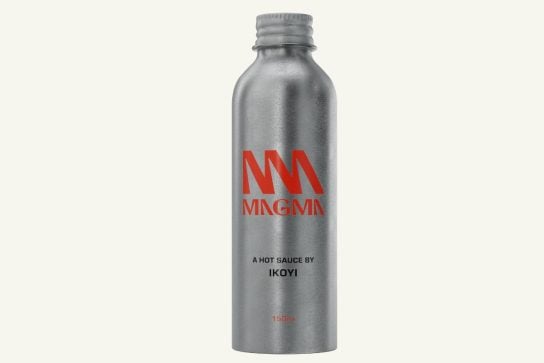
We have a co-packer who we work very closely with. We’ve done more than 15 trials to get it to where it wants to be. In terms of the design, the bottle, the branding, that was a lot of fun, the process of making something that looks like it has fallen from Ikoyi but it’s something else. We wanted it to have that sharpness and precision, but at the same time it’s a fun object to hold and look at. The same level of love and care that we put into our food [at Ikoyi] has gone into making this £10 hot sauce.
Who is the market for Magma Concepts? How will it stand out?
There’s a lot of people that have never been to eat at Ikoyi because of the price point. For people to be able to have a piece of it at home, there is a market for that. We’ve done it ourselves, the design, the tasting… so much has gone into it from myself and Iré. It’s very ‘us’. It’s not like we paid a consultant to do it. From a taste perspective, this hot sauce is the best one that I’ve tasted in its pricepoint. I’ve tasted all of the hot sauces of at least 15 other competitors and not one of them did I enjoy. I find them very vinegary, lacking depth of flavour, sometimes too spicy. As a chef, my expertise is breaking down flavour. I can taste what’s gone into [them] and a lot of the time I feel like I’m being sold a brand; I’m not being sold soul, depth and flavour. I think that’s what sets us apart.
How do you use your hot sauce?
If I’m just using it as a standalone ingredient, I’ll use it with dumplings, noodles or eggs. But for the most part, I like to mix with other things, specifically a jus, some butter, some honey, some vinegar, and I make a marinade or a dressing, then I can lengthen it into other applications. Our hot sauce is not blow-your-head-off spicy; it has a sweetness to it and slight acidity. There’s no vinegar which makes it different to other hot sauces. Vinegar helps to preserve and adds a level of acidity but it doesn’t add umami flavour. Ours is lacto-fermented so there’s a savoury character to the acidity. We’re using two varieties of peppercorn: red Kampot pepper from Cambodia and Penja pepper from Cameroon. From what I can see, this is the first hot sauce that is using two premium peppercorns. Our is a hot sauce but the ‘hot’ isn’t just coming from the chilli, it’s coming from the peppercorn.
What else can we expect from Magma Concepts?
I want the concepts and the flavours to be things that people don’t need to research to understand. They’re going to be everyday concepts like a very good chilli oil, a very good soya sauce with garlic and honey blended into it. We do a condiment at Ikoyi called garlic soy; it’s a perfect seasoning for putting on stir fry at home. This condiment has some rice wine, vinegar, garlic, honey, aged soy, and it’s blended and reduced to a single condiment. It’s almost like a multi-purpose stir-fry glaze you can use to marinate meat, to deglaze vegetables, to season rice. It’s incredibly versatile but it’s not super cheffy or highbrow. It’s just a good condiment.
Ikoyi has released its own products before – tote bags, caviar, T-shirts. Why do you choose to do it?
A number of reasons. It started in the pandemic out of desire to stay connected with people and give them a piece of the restaurant. Fundamentally, why am I in hospitality? I think I’m in it for the creativity and the act of making people feel good and cared for. This idea of hospitality as giving something of yourself to others is a strong instinct in me and Iré as well. I’m very into design; design is at the core of what I do at Ikoyi, whether it be recipes, the ceramics, the interior, the mood, the plating. If we apply this creativity and thoughtfulness and try and scale it and do it in an economical way, it’s exciting to see what could happen.
ADVERTISEMENT