Where do we go from here? A panel talk on equality in the hospitality industry
Published 23 July 2025
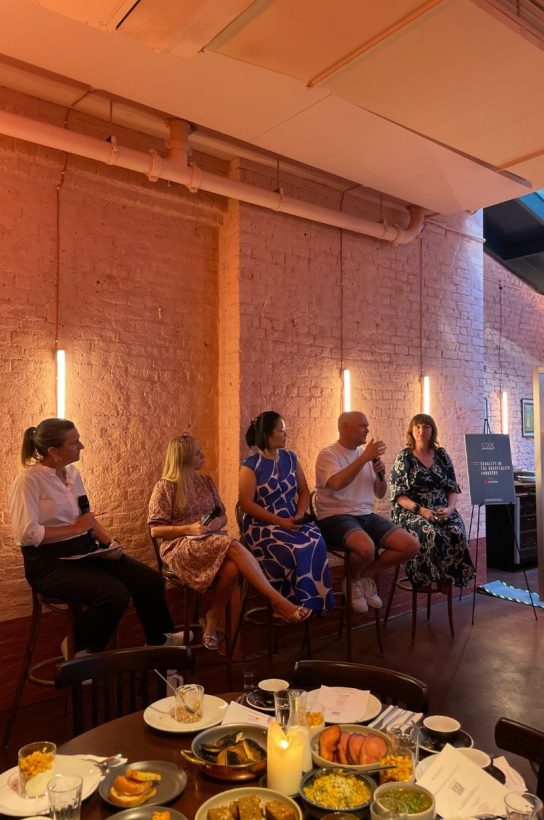
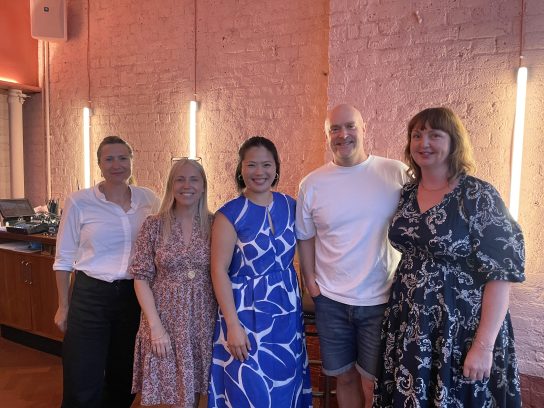
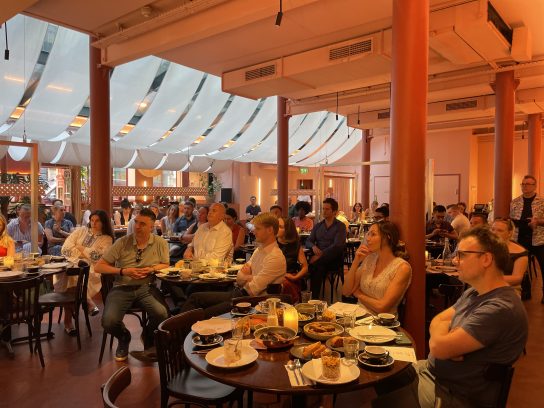
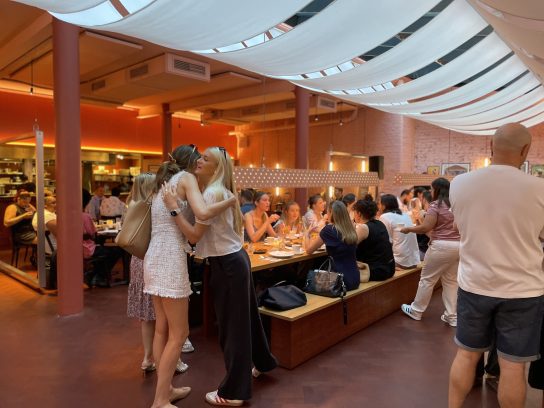
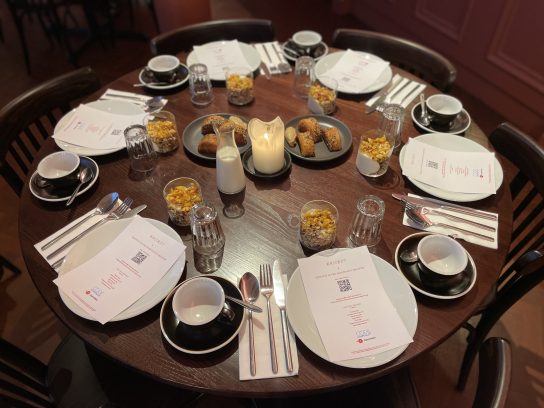
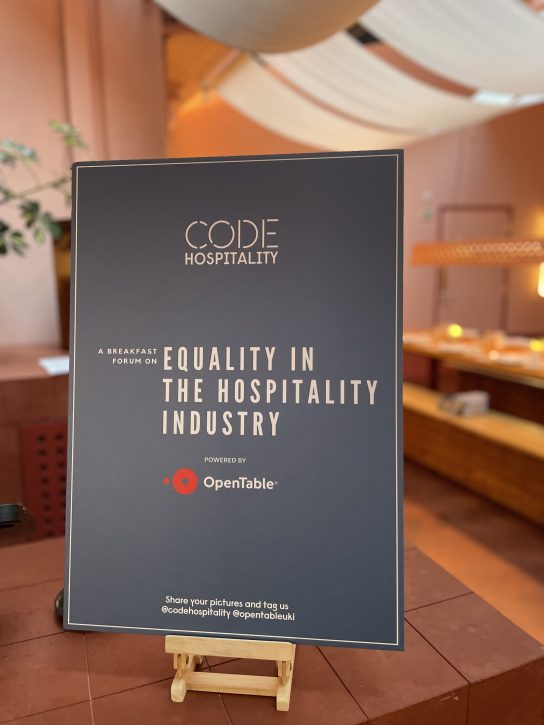
What was on the table at CODE’s recent Equality in the Hospitality Industry breakfast forum, powered by OpenTable, held at Kricket in Shoreditch? Literally speaking, there were sesame cruffins with salted date butter, bacon chops, and pots of creamy, vanilla-flecked shrikhand. Metaphorically speaking, diversity, workplace culture, safety, accountability, and leadership were among the many subjects up for discussion by our panel of industry leaders comprising: Mary-Ellen McTague, chef partner at Pip in Manchester; Will Beckett CEO of Hawksmoor; Mandy Yin, founder of Sambal Shiok; and Justine Murphy, founder and CEO of mymuybueno.
The event itself was sparked by three recent flashpoints: the open letter signed by 70 female chefs, a controversial interview with Jason Atherton in The Times, and the glaring gender imbalance at this year’s Michelin awards. What we wanted to know was: where do we go from here? Is there anything we can actually do?
Here are some edited highlights from the event.
On the role played by men:
Mandy: “It’s very easy as women or being a minority to talk into a vacuum. That’s why I’m really quite moved to see so many people here today and so many men. It’s really important for you to be here and to listen and to recognize that just because you might not be aware of something doesn’t mean it’s not happening. […] If you’re out and about with your friends and you see your friend harassing someone, tell them to stop it. It’s on you, right? You’re the positive influence. You’re the change.”
Will: “One of the reasons I’m here is because I’ve learned that there is less risk – professional or personal – for men, particularly straight white men, than for some other people taking these issues on. Some of the things you’re talking about—speaking up, for example—tend to come at some loss to the person that does it.”
On leading by example:
Mandy: “My GM, my head chef, they’re both men. My GM, he’s worked with me from when I opened the restaurant. He knows exactly what I expect, what I do not tolerate, and he affects that for me. It’s just leading by example.”
On what change looks like:
Mandy: “We are in a transitionary, work-in-progress phase. Change doesn’t happen immediately. It takes years. It might take decades. But, the fact is, it takes all of us and it’s a multi-faceted, multi-pronged approach.”
Mary-Ellen: “I’ve not worked in other industries. I don’t have a lot to compare it to, but I feel like [hospitality is] probably a little bit behind. It is nothing like it was when I first started but I’m still often the only one in kitchens. I find it hard to recruit more women to the workspace. We have to make it more appealing by making it better. To make it better is seismic change stuff, we need big ideas.”
On everyday actions:
Will: “There’s a temptation to do big, sweeping, but temporary engagement. And actually, the more meaningful work is to make it less big, less sweeping, but just make it consistent and do it over time.”
Mary-Ellen: “Making a difference, doing something every single day, being seen to do things, especially when you are in a position of leadership, is really important.”
On the business imperative of taking action:
Mandy: “It’s a no-brainer really because all our businesses are people-based businesses. Surely you want your staff to hang around and to be happy and build your business.”
Will: “The argument for doing the right thing because, ethically, it’s the right thing to do has only got everyone so far. I think that if we can get to the stage where people feel, for example, “Hawksmoor is financially successful, they’ve opened plenty of restaurants and they seem to embrace all of this stuff … I wonder if those two things are connected?”. I think that starts to make people who aren’t instinctively inclined to do it, particularly bigger companies, include some of it in the way that they think and the way they are. So that’s how we see our responsibility: we’ve got to make Hawksmoor into something great, and we’ve got to run it the right way.”
On accountability:
Justine: “It’s about creating a safe space for people to be able to speak up. If I rewind back to twentysomething me when I had an experience then, I was in restaurant management in a company I loved, a group I loved, and I left because of what happened and that’s happening all the time now even. We need to have those safe spaces so A. these things don’t happen and B. if and when they do, they feel comfortable enough that they’re going to be supported and that people are going to be held accountable.”
On the new generation:
Mary-Ellen: “I was the only woman in most of the kitchens I worked in for most of the first part of my career. Obviously, that’s changed, and there’s been a societal change as well. We just expect better. But there’s been an influx of younger people into the industry who do rightly expect better. What we’re seeing is people are entering the industry, being very disappointed, and they’re leaving, and it’s a big problem. We’re losing loads of brilliant and talented people to the fact that hospitality isn’t always very diverse, very welcoming. It’s not always felt like a particularly safe space to be.”
Justine: “We’re all the answer. I think everyone needs to be held accountable. Younger generations, they are looking to us to be accountable, to make change. I think we have to buck up. We have to start speaking out and encouraging others to speak up and speak out.
Will: “One of the things that I thought on the back of that [open letter] was that hospitality people from my generation said something along the lines of “it’s so much better than it used to be”, to which the answer, perfectly reasonably, from anyone who was under 30 was, “I don’t care how much better it was than when I was eight years old! I care whether it was better than last year or the year before”. The bar is being pushed by younger generations of people with newer expectations that need to be met.”
On fostering diversity at the top:
Will: “What I’ve been thinking about most this year is less about what the experience is like for everyone in hospitality. I’ve been focusing on the lack of diversity—including, by the way, at Hawksmoor—at the top. Why? Perhaps because some of the changes that we have seen haven’t really translated to the top of organisations. What we have learned, particularly in terms of promoting or hiring, is that the person doing the hiring has to be on the front foot with encouraging the people that you would like to apply to do so, or the people that you would like to get promoted to do so. I think it’s really about being proactive with selection, encouragement, and what you want to do with salaries.”
Mandy: “For me, personally, I would rather promote internally. It’s seeing someone’s potential and trying to offer mentorship or training and promoting on merit, not because they’ve asked for it.”
On industry standards:
Mary-Ellen: “I really love that idea [of an official ‘gold standard’ awarded to restaurants]. If it’s something that every business, large and small, can access and put themselves forward for in terms of awards and recognition. […] It would definitely make the industry feel safer, more open, more welcoming. Some kind of ombudsman, other industries have it, where you can take your complaint, I think that would really help with setting the standards and encouraging other businesses to adhere to them as well.”
On calling out bad behaviour:
Justine: “I’ve been in the industry since I was 17, and to be honest, I haven’t seen huge amounts of change. Recently off the back of The Times, I was blocked [on Instagram] for taking part in the conversation, and that incensed me so much. I was so angry! Why are we being silenced? Why are we all just putting up with this and tolerating this? […] For me, writing and exposing something, was a huge deal, you know. But the difference between me now and me 20 years ago is I built a safe space. I have a business, I have my own little bubble that I feel safe and secure in. The biggest factor for anyone to speak up is fear, right? What if I speak up too much? What if this impacts the next job I get? That fear is holding us back from being able to move the conversation further.”
Mary-Ellen: “I certainly feel the pressure not to say the wrong thing or say too much. You worry about the consequences for your career. And the online backlash you can get is just unpleasant actually. That’s not something you want to dive into all the time.”
On actioning change:
Will: “My sense is that we’ve made a lot of progress, albeit not enough, in terms of the toxicity [we’ve] discussed, or creating more welcoming environments for everybody. But I think I’m right in saying, since #metoo, since George Floyd, data-wise, upward mobility has gone backwards, not forwards. Something that we’re doing isn’t working, and it isn’t enough to have nice words about it or have meetings about whatever it is. Something fundamental has to change. Specificity is important. I think we have a tendency to have generic, feel-good conversations – let’s go out and empower women, for example. That sounds awesome! But how? What are the actual things that you’re going to do? If you want to make something better, name what you’re going to do better, and when you’re going to do it. I think it’s often the bit that’s missing in these conversations.”
Mary-Ellen: “The most striking thing that I see is that it’s finally happening and in a very big and public way. That’s very different from when I started in hospitality.”
If you have any thoughts or ideas on how we can support positive change in the industry, we’d love to hear from you. Drop us an email here.
ADVERTISEMENT

ADVERTISEMENT