In Conversation: Jenny Lau and Cynthia Shanmugalingam
Published 6 November 2025
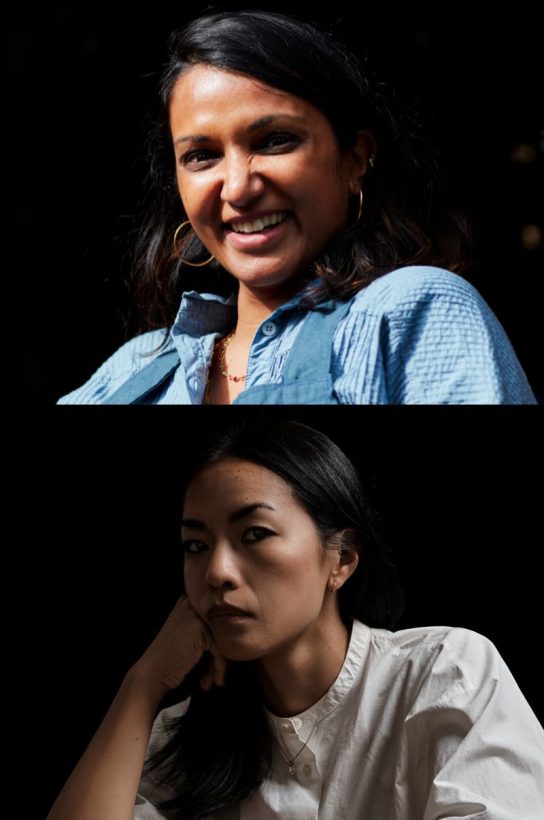
Jenny Lau (@celestialpeach) is a writer, event curator, community organiser and the founder of Celestial Peach, a platform for telling stories about Chinese diaspora food, people and communities. She curates food events for the UK ESEA (East and Southeast Asian) community and cooks twice a week at ESEA Community Centre in East London. She is the author of An A-Z of Chinese Food (Recipes Not Included)
Cynthia Shanmugalingam (@cynthia.uma) is a British-Sri Lankan cook, writer and restaurateur. She is the author of Rambutan: Recipes from Sri Lanka and the founder of Rambutan in Borough. Both have been recognised among CODE’s Women of the Year (Jenny most recently in 2025; Cynthia in 2023). The two women sat down with Simran Hans for CODE to talk about career changes, cooking for and within diaspora communities, creativity and their resistance to ‘authenticity’.
Both of you came to work in food following other careers. What led to that transition?
Jenny: I was working in fashion, and before that I was in music. Food I came to in my mid 30s as a form of connecting with my heritage and as a way to build community, primarily with diasporic Chinese people. Through food, I can explore my Chineseness.
I’d been cooking by myself, with friends, volunteering at supper clubs, putting on supper clubs, putting on collaborative bake sales. I’ve only been cooking in a proper kitchen for the last 18 months, since I joined the community kitchen team at the East and Southeast Asian Community Centre [in Hackney]. Hackney Council funds about 12 different lunch clubs around the borough, providing affordable, warm, nourishing and culturally appropriate meals, primarily to elderly people. I haven’t worked in a professional restaurant, but it’s still a restaurant in the sense that we do 100 covers per lunch, three times a week. My body aches!
Cynthia: All my parents’ friends were doctors and dentists, and my dad was a lecturer, and they wanted us to go into professional careers. I was an economist and did different desk jobs that I hated in order to make good money. But I’ve always really loved food.
I was restaurant-adjacent. I was a fan girl and made lots of friends who were chefs. I set up this restaurant incubator trying to help people start restaurants, and I did this food truck, Kitchenette Karts, that helped ex-offenders get into street food.
When I went back to Sri Lanka in 2012 it was the first time I could go to our village home since the war started [in 1983]. I was born in ‘81, and it ended in 2009. I was like, ‘Oh, mum’s cooking on fire. Man, mum’s got skills!’ The vegetables came from the fields in my dad’s back garden. The fish came from ten minutes up the road. I thought, could I do this in London? I wrote a cookbook and did a few pop-ups, and I spent ages trying to get a site and figure out if that could work.
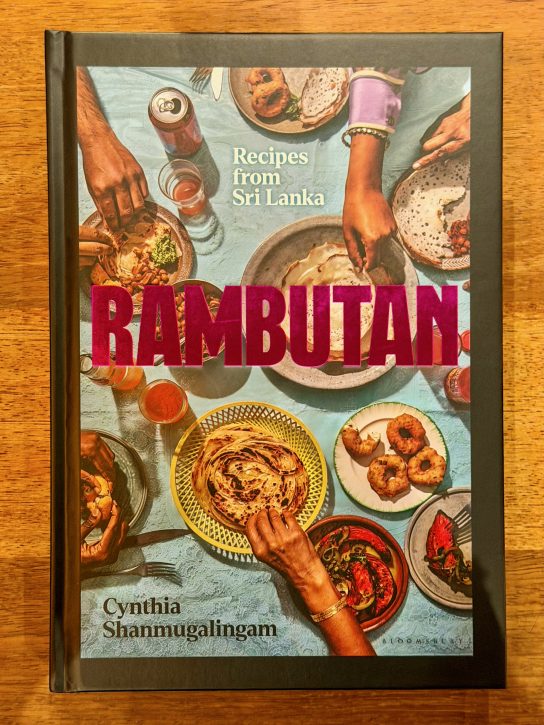
Why did you decide to write your cookbook, Rambutan, before opening Rambutan the restaurant?
Cynthia: When COVID happened, it was like, no one’s ever going to go to a restaurant again, maybe it’s time for me to give up on the whole thing. My best mate was like, do a cookbook. I hadn’t written anything since I was 16, but I did Ravneet Gill’s amazing online Countertalk course on how to write a cookbook proposal. I wrote a cookbook proposal and I sent it to some people. It was all quite a long shot. But writing a book gave me an opportunity to research all the recipes, and go to Sri Lanka for six months, and figure out what it was I wanted to say with the restaurant.
In both of your work, you’re translating ‘ethnic’ food for a diaspora audience. Jenny, you talk about this in your book, An A-Z of Chinese Food. But how much of your work at the community centre do you think of as translation?
Jenny: I see it as the opposite, actually. The book’s conclusion is that I don’t need to translate myself anymore. I can do that because I don’t operate in a commercial F&B business. The community centre primarily serves that ‘ethnic’ audience, and we are already cooking the food that they want and know. What they want is a taste of home. It’s to do with the setting; it’s not a restaurant, you’re eating communally. We’re observing an old school dining etiquette where you’re eating around round tables, dining family-style, knowing you need to serve your elders. Taste is not just what your senses are ingesting.
It doesn’t mean we’re not restricted about what we cook, because we are restricted by budget. We rely on a lot of donations, but the donations come from, for example, Asian veg wholesalers. Normally it’s mooli. It’s always mooli… We cook for the elderly tastes and preferences: the vegetables have to be soft, it has to be white rice (because they won’t accept any other rice), there’s always a soup.
Cynthia: It can feel upsetting if you feel like you know the cuisine and there are things that you don’t recognize on the menu. But it’s not because we tried to translate it for a white gaze or for a European audience. Drumsticks, for example, is a Tamil vegetable, and I didn’t make any recipes including it in the book, because it’s quite hard to get and it’s quite hard to eat. There are loads of amazing Sri Lankan recipes that use tomatoes and potatoes and carrots and pineapple. I wanted to anchor the book in ingredients that were easy to get. It’s also how my mum cooked when she came to England. What we try to do in the restaurant is cook food the way that I like to eat. If there is anything that’s not traditional, it’s more about self-expression than it is about translation. I think of fun and deliciousness as more anchoring principles for me.
Jenny: I completely relate, and I think we can always be hardest on our own people. The stakes are higher when you’re feeding Sri Lankans, because they’re looking for something different. They’re looking for familiarity and nostalgia, which means you’re not allowed to have fun and be creative. You have to cook what they remember their grandmother cooked!
Cynthia: The aunties in their 70s and 80s are way more accepting and excited by new stuff, partly because they came to England and they were like, “What’s this asparagus? I’m gonna make curry out of it”. They were pioneers in that way. I think it comes from being more secure in their identity. People who grew up here, who maybe haven’t had the opportunity to go to Sri Lanka often, have this sense of something greater to defend, and so are more upset by mutton rolls or whatever not being on the menu.
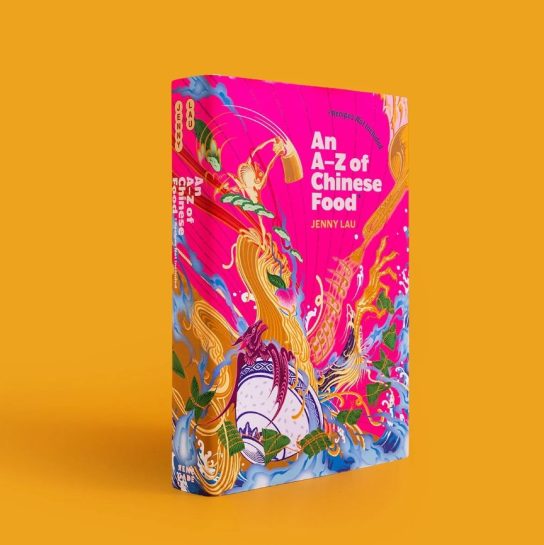
How have you resisted the expectation to deliver ‘authenticity’ with your food and food writing? In both your books you question the value of that word. Jenny in the A-Z of Chinese Food, you talk about ‘sincerity’ instead, and Cynthia, in Rambutan you emphasise your ‘special perspective.’
Jenny: In the first chapter of my book ‘A is for authentic’, I tongue-in-cheek break down people who care about authenticity into two groups: gatekeepers or infiltrators. Paradoxically, both gatekeepers and infiltrators can be from any background. Gatekeepers are obsessed with impossible benchmarks: it has to be this price, it has to have these ingredients, it has to be made this way. And infiltrators are those people who have earned their way into that culture, and they’ve got the seal of approval from an auntie, or from a Michelin inspector.
‘Authenticity’ boxes you into this place that’s either located in the past or in a constructed taste world. A lot of authenticity is to do with false memory and emotional connections to food that you can’t really recreate in a restaurant anyway. I prefer to say, I cook with sincerity. I always say, hire me for my experience and authority, not because I can provide some kind of authenticity, because sometimes that means, she’s the token brown person – box ticked.
Cynthia: I feel like creativity is our birthright. Sri Lanka was colonised by three different European powers for a total of 450 years, with a huge toll on its people, and destruction, and famine, and violence. There were slaves brought to Sri Lanka by some of the colonising powers. There have been Arab traders and Chinese traders for centuries. One of the amazing things about the cuisine is you can see how the ingenuity and creativity of Sri Lankan cooks began to take on these ingredients and techniques, and dishes, and make them our own. We didn’t have chilies until the Portuguese brought them over from South America in the 1600s.
I also do feel like Sri Lankan cuisine is often cooked by other people, and there’s something very painful about that for me. A genocide happened in Sri Lanka, and it got almost no coverage in the press. And then there were no Sri Lankan cooks in the press. And then when our cuisine was represented in the press, it was by Meera Sodha from India, or Karan Gokani who is also from India, or Yotam Ottolenghi, who’s from Israel, and or Henry Dimbleby, or Rosie Birkett. It’s not to say that any of us can’t cook each other’s food, of course we can. But there’s a value in having Sri Lankan voices talking about our own food and however we choose to cook it, whether we want to do it traditionally or fuck with it.
Cynthia, why has it been important for you to weave in the history of that genocide into your writing?
Cynthia: I couldn’t write about Sri Lanka and food without talking about the warts-and-all history of what’s happened. If you’re not careful, you end up being a tourist board ambassador for the island. And I feel a great sense of responsibility to try and tell a full story.
Jenny: I love what you said about how you’ve got to be careful, because the next thing, you’re some kind of tourist ambassador. I’ve seen this happen to people who are heralded as the prominent British Chinese people in the media, but what it means, really, is that they are palatable, because they don’t speak out. Similarly in my book, I write about delicious food, and on the next page, talk about racism. You can’t separate the people from their culture and their cuisine.
What do you think would make the world of hospitality a better place?
Cynthia: It disappoints me that there are so many British Raj themed restaurants that are so decorated, because actually in 2025 we can do better than a concept based on something from 1825.
Jenny: I think London particularly is a frenetic place for any independent F&B company to survive. I find the hype machine really terrifying and really destructive, actually, and frivolous and meaningless. The worst thing I could ever wish for at the community centre is for the hype to hit. I mean, it has had hype moments where people are like, ‘Oh, this is the secret Chinese meal you never knew you could get!’’ Like, no, no, we don’t care for your custom. We serve a particular community.
Simran Hans is a freelance writer and broadcaster based in London. She writes about culture – mostly film, but also TV, music, art, books, and food – for publications including Vittles, The Guardian, The New York Times and The Financial Times.
ADVERTISEMENT