“It feels like a really exciting time in Manchester”
Published 24 October 2025
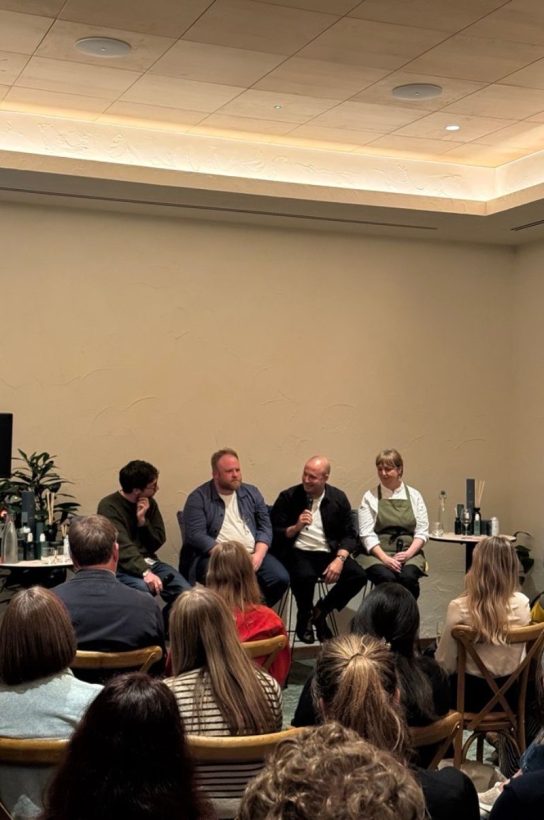
The CODE Founder Series, powered by Toast, made its way to Manchester last week for “Manchester Madness: What the Rest of the UK Can Learn”, a panel talk at Treehouse Hotel with some of the leading lights of Manchester’s enviably dynamic, independent restaurant scene. On the panel: Mary-Ellen McTague, founder of Pip at Treehouse; Shaun Moffat, founder of Winsome; and Richard Cossins, co-founder of Higher Ground and Flawd. The event took place at Treehouse Hotel Manchester with food by Pip, drinks by Cloudwater Brewery Taproom, and goody bags for the attendees from Rituals. At the end of an engaging and informative session, the panel took questions from the audience. Here are the edited highlights of an entertaining and inspiring night.
It feels like there is so much momentum in Manchester right now. Is there anything you would like to see more of in the next couple of years?
Mary-Ellen: “It already feels like an absolute dream scenario compared to a few years ago. I think maybe [I’d like to see] more bakeries which is a very odd thing for a coeliac to say! I’m really jealous of European towns and cities that have bakeries on every corner. For me, that is the epitome of civilisation even though I can’t eat anything there! I think things are really in a healthy place. I’m just so excited to see where it goes. Where it goes is down to the creativity and individuality of whichever human beings pitch up here or are from here and do something creative in food and drink in Manchester. It feels like a really exciting time and full of potential.”
Richard: “I think we’ve got a fantastic mix of both independents and concepts which are coming into Manchester from elsewhere. For me, some of the biggest success stories in Manchester are independents. It’s a testament to the city that it allows independents to thrive and hopefully it retains that.”
During your journey to where you are now, what’s your biggest learning been?
Shaun: “I had a mentor who told me to make sure you learn as much as you can, just be a sponge and listen and try and learn and listen to everyone. Every day is a school day.”
Richard: “Keep your mentors close, keep in contact with your mentors. A trustworthy landlord is really helpful. The beauty of restaurants and hospitality is that there are so many facets to operating hospital businesses. There’s so much that I’ve learned from HR through to business rates through to insurance.”
Mary-Ellen: “Being open to the fact that you’re not going to set out knowing everything you need to know. Take the help where it’s there. If you can get a really great accountant or somebody who’s really great at HR, or somebody who’s going to water your plants whilst you’re working really long days, wherever the help pops up, take it and don’t be too proud. No business is one person; it’s always a person or a group of people and an idea and then a huge support team, whether that’s your staff or your family or whatever it is that is helping to make that thing thrive.”
We hear a lot about restaurants closing down. How do you survive? Do you have any advice?
Richard: “I think you’ve got to continue to be present. Again, testament to Manchester, that Manchester demands that. There’s a lot of times I’ve been pulled out of service recently due to the nine-to-five job element of what I do, and it just doesn’t beat coming into contact with guests, and I think keeping those guests entertained and ensuring that you’re coming at them with freshness and excitement about what we’re doing. We’re not at the point where we’ve got an accounts team or HR team; we do that with ourselves. It’s very challenging, but you’ve got to be there for your guests.”
Mary-Ellen: “For your team as well. You can’t really beat, no matter how much you write down or how many handovers you leave, there isn’t really any replacement for being there with your team and showing them what it is you want to achieve. If you’ve got a really specific idea of what you want your business to be, I think sort of your presence there is kind of one of the most important things.”
Shaun: “At what point do you become an institution and you’re here forever? How do you stay relevant and consistent and keep things moving forward and keep people coming in? It’s being present. It’s your team. You just hope each day’s better than the next and you just keep moving forward.”
It’s lovely to see such an optimist outlook on the potential for the hospitality scene here. Are there enough customers that understand the independent, ethical sourcing side of things and are willing to throw their spend consistently behind supporting businesses like yours?
Richard: “It’s tough out there. You’ve got to really fight for guest attention these days. Thankfully, people are starting to come around and realising the strength of independents and putting more support behind those independents throughout the city, which is great. We feel, particularly at Flawd and Higher Ground as well, when other sectors in the city are really kind of powering on, Co-op Live and Factory International have been massive openings and the football brings in a totally different type of guest, gradually that tourism footfall is really growing which is great but there’s definitely periods of time when you do notice a fallout.”
Over the next six to 12 months, what would you say is an important thing that you would focus on to keep the success of the business covered?
Mary Ellen: “For me, it’s all about the team and building a happy, thriving, confident, skilled, cohesive team, which is not very easy, but it’s really, really important. To me, it’s the beginning and the end of everything. The people that are there, day in, day out, hopefully delivering what it is you want to deliver, whether it’s front of house or kitchen, that, to me, feels like the right place to be focusing everything.”
Shaun: “We were once juniors. We were valued and that brought us to where we are now. It’s instilling that [in others], pushing that person to then train that person, and then that becomes someone else’s dream, and that then becomes a restaurant. So it keeps things moving. It keeps things alive. There’s a lot of dying trades in the world, and we’d like this not to be one of them.”
ADVERTISEMENT