Head to head: Traditional vs. modern cooking methods
Published 16 November 2018
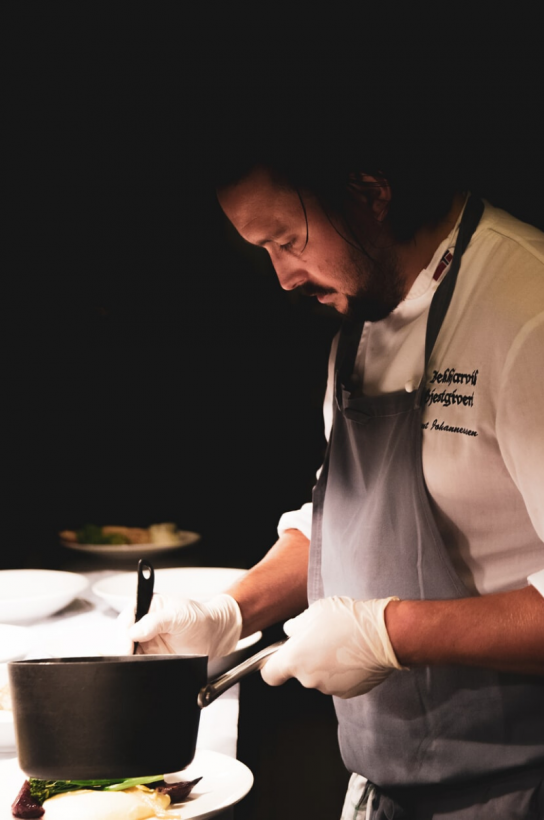
Each edition we ask two industry figures to go head to head on a subject exercising the food world. Here we ask a restaurateur and chef why they have such different approaches to kitchen equipment.
Russell Norman, POLPO Restaurants
I have always tried to make the food in my restaurants look and taste like home cooking. It’s a lot more difficult than you think.
Home cooking is about generosity and abundance. It comes from a heartfelt sense of tradition, warmth and love. Restaurant kitchens count precision, expertise and consistency among their virtues. Not being a professional chef myself, I have always had a preference for home cooking, holding gingham-aproned grandmothers in far higher esteem than white-jacketed pros.
But it is also the environment and equipment of a professional kitchen that can get in the way of the simplicity of a home cooking philosophy. And I believe it’s getting worse.
Top of the list of my bêtes noires is the sous-vide machine. Supposedly designed to deliver consistency of flavour, an even pinkness in meat, reliability in terms of temperature control and enhanced mouth-feel and texture, to me it’s a boil- in-the-bag monster. Cooking using the sous-vide method reduces expensive cutsof meat to tepid, mushy baby food. There is something slightly disgusting and livery about the results – a pale protein, vacuum- packed and bathed in warm water. It’s what I imagine synthesised meat might look and taste like in some dystopian future.
What is wrong with the centuries-old analogue method of heating some butter in a pan, getting it nice and hot, hearing that sizzle as the salted meat hits the fat, smelling those juicy aromas as they fill the kitchen, getting the edges a little charred and the marbling rendered… I’m starting to drool as I type. I wouldn’t be getting quite so excited looking at a £500 stainless steel plug-in water bath.
Are old methods always better? I have to say, I think they are. Anything that gets you closer to your ingredients, more in-tune with your food has to be better in my view. Part of the magic of cooking is the transformation. Turning base materials like onions, celery, carrots and garlic into sauces, soups, stews and risottos is borderline alchemic. But starting that process in the kitchen with a sharp knife and a chopping board is as close as I get to daily meditation.
There is something quite therapeutic about making a really fine soffritto from scratch. Likewise, starting a loaf of bread by mixing fresh yeast with sugar, watching it liquefy and then making an elastic and responsive dough. And having spent time living in Italy alongside real-life pasta grannies I got to appreciate the absolute pleasure of turning a mound of flour onto a Carrara marble work surface, making a small volcano and cracking a couple of yolks in the centre to start the day’s ravioli. Joy. Why would you want to bypass these pleasures by introducing electric bread makers, food processors, and other gadgets and gizmos?
I despair somewhat when I look into restaurant kitchens and see a space that resembles a chemistry lab rather than a food preparation area. I like to see flames, hear the clatter of pans, sizzling, bubbling, splashing, shouting…
Molecular gastronomy has a lot to answer for, promoting cleverness, inventiveness and science over flavour, simplicity and a focus on ingredients. TV programmes like MasterChef have convinced young chefs that it’s OK to use as many techniques and ingredients as possible.
I’m not a dinosaur. I’m barely old enough to remember Keith Floyd on the telly. But I am passionate about food, and I believe that simplicity, honesty and tradition are worth fighting for. I’m suggesting a recalibration of priorities and a return to basics. There is an inverse relationship between quality of ingredient and the amount you have to do in the kitchen. In other words, let the food speak for itself. Chefs are not artists, they’re not pharmacists, they’re not scientists nor are they magicians. They’re cooks. Let’s put The Cook back into cooking.
James Knappett, Kitchen Table
Ask someone to picture a typical kitchen and they might come up with something like this. A small, dark room packed with burly chefs, elbow to elbow in front of roaring open flames, creating a cacophony of thudding cleavers and clattering pans as they work. At Kitchen Table, it’s a little different – we serve 20 guests a night, 12 courses each, and our open kitchen is, essentially, an island right in the middle. Each service, there’s nowhere to hide: everything that I, and my brigade of chefs, do, is carefully watched. So while there’s nothing wrong with roaring flames and clattering pans, we take a different, more technology-driven approach.
In terms of prep, the first thing Ido each morning when I get into the kitchen is fire up the KitchenAid, cup – or mug – of espresso in hand. We bake our bread in-house every day, which means a fairly heavy reliance on the KitchenAid for mixing the dough. It’s a dream – throughout prep I’m inevitably sidetracked by deliveries, discussions and phone calls, so it gives me peace of mind to know that I can leave it whirring away in the background. Our Vitamix is my favourite piece of equipment – it purées everything extremely finely.
Our menu is always 12 courses, and changes daily, so there are a seemingly endless number of sauces to prepare. We use the Vitamix for all of our sauces and herb oils, including sorrel sauce, thyme oil, fig leaf oil, and pine oil. I particularly love a fresh mint sauce that we whizz up to order. We do this right in front of the guest, before we serve it. The flavour and colour are extraordinary, and we’d never be able to replicate it without the Vitamix.
We also embrace the joy of technology during service, but more for the benefit of our guests than the chefs. Full disclosure: we have a charcoal grill in the kitchen, but mostly cook over an induction hob, for numerous reasons. Firstly, it keeps the heat down. No guest wants to watch a chef sweating over their next course. And no chef wants a dining room full of hot, uncomfortable guests – a key concern of ours when someone can be seated 2 feet away from the hob. It’s also really easy to keep clean, which is so important, especially when somebody is eating nearby. Open flames require a big, noisy extraction system, but our induction hob means that we don’t have one. Our diners can have a conversation without resorting to shouting and sign language. They can engage and chat with us directly, which is the whole point of Kitchen Table.
We also use a Rational combi oven, which is our most useful piece of large equipment, and the one my chefs fight over. At the risk of sounding like an infomercial, it really does do everything. You can steam fish, you can bake bread, you can dry roast or dehydrate, simply by pressing a few buttons to choose whatever fan setting or amount of moisture you want kept in there.
With all this said, I’ll admit that technology does have its limitations. I would never cook meat in the rational oven, as the second-by-second control given by pan-cooking or grilling is so necessary. And with every young chef that comes into my kitchen, the first thing I ask is if they’ve brought their own turning knife. It may be low-tech, but it really is one of the most useful tools chef can have in his arsenal. Perhaps there’s a secret technophobe in me after all.
This article was first published in Issue 16 of CODE Quarterly. To subscribe, please click here
ADVERTISEMENT