On Legacy: women making a mark on the hospitality industry
Published 28 May 2026
One strong theme that came through in our interviews with CODE’s three Women of the Year this year – Fay Maschler, Dara Klein and Nieves Barragán Mohacho – was legacy. What is legacy? And what do you want yours to be? For Fay Maschler, winner of CODE’s Lifetime Achievement Award, sponsored by Planday, it might take the form of storytelling and her autobiography Give it to the Girl. For Dara Klein, winner of our Breakthrough Year Award, it’s about honouring her family’s trattoria and her mother’s work. While for Nieves Barragán Mohacho, whose new restaurant Legado quite literally means ‘legacy’, it’s about paying respect to the people and places that have made an imprint on her.
It’s a big subject – and, in an industry where businesses are sometimes just trying to make it to the end of the week, it can even feel like a luxury to talk about it. Because before you can think about what lasts, you first have to build something sustainable enough to endure. Legacy may be shaped by ambition and creativity, but it also depends on something more practical: a predictable foundation. The daily habits, systems and rituals built shift by shift are often what create the stability that allows businesses – and the people behind them – to think long term. Whether you have your own brand or business or are working to build someone else’s, it’s worth considering what your contribution can be. Can legacy really be measured in turnover, in number of sites, in awards? Probably not.
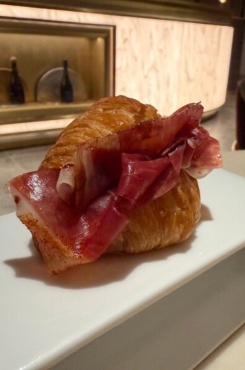
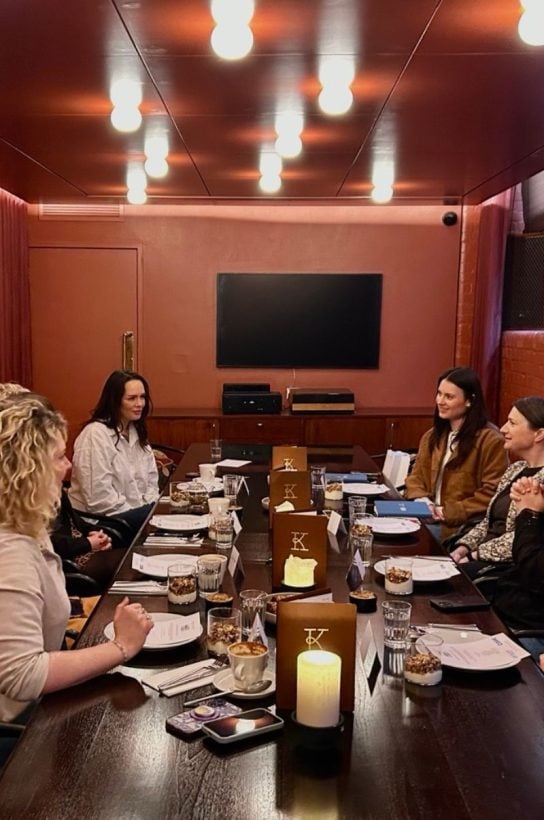
Over an Indian-inspired breakfast of sesame cruffins, vanilla shrikhand and eggs bhurji at Kricket, we gathered a group of industry leaders to discuss the theme of legacy and what it means to each of us.
In attendance:
Sarah Haddon, VP of Regional and Partnerships at Planday
Lorna MacPherson, F&B Director, Cubitt House
Emma Piggott, founder of The Prince Arthur in Hackney, one of CODE’s Happiest Places to Work 2025
Ria Pattni, director of marketing, JKS Restaurants
Julie-Anne Pugh, marketing manager, Blacklock, and one of CODE’s 30 under 30, Class of 2026
Hilary Armstrong, content editor, CODE Hospitality
Legacy as Everyday Impact
Lorna:
“I wouldn’t have ever stopped to think about my legacy. I’m thinking about the here, the now, about how I can change something that doesn’t have a positive impact into something that does, even if it supports just one person on my team.”
Emma:
“It’s a great thought exercise. Even if you’re not a founder of a business, even if you’re not creating a thing, a brand, a location, whatever, we all have a legacy because we all have people around us, so we all have that impact. I would be so flattered if the only thing I ever did in my life was inspire a young woman to go out and just absolutely boss it. That would be fine for me.”
Sarah:
“For me, that’s quite an interesting distinction…So I haven’t created a thing, right? So I’m not necessarily leaving that behind. For me, legacy is about fundamental change. The fact that we can do the things that women 50, 60 years ago couldn’t do, we’re here because of the legacy of the women before us. So actually what is the legacy that I want to leave behind? What mark do I want to leave behind?
Motherhood, Visibility & Career Identity
Lorna:
“I was talking to a friend about my experience of returning to work after mat leave and how I used to walk around like pumping quite openly. I want other women to look and go, ah, okay that is what it’s like to be a mum in the workplace because I didn’t see that.”
Ria:
“The fear of losing your way and your career [after mat leave] is definitely something that scares me because I don’t know if I can go back in the same position and you worry about losing that legacy and what you’ve built up over the last, for me, 15 years, stepping out of it.”
Julie-Anne:
“I’d really like to think that when you look back it’s not necessarily the massive 50-year legacy but the little legacies of your day-to-day, everything you put into the workplace, a really nice system and structure.
Workplace Culture & Responsibility
Lorna:
“I did some research about sexual harassment in the workplace and every single woman I know who spoke to me had a story. The biggest thing that came out of it was not necessarily what happened to them but how their management dealt with it; most said, not in a positive way.”
Julie-Anne:
“I remember being a really junior manager, I was 22, really young, and having things happen to my team. One time I followed my senior manager and we didn’t nip it in the bud but from that moment on, I was like, I’m doing zero tolerance from now on. They’re just out; it can’t happen.”
Hospitality as a Career & Cultural Legacy
Lorna:
“We started the petition to try and get the government to recognise hospitality as a skilled career and to include it in second school careers education so that it is presented as a profession and a lifelong career. Over the past year, I have watched recruitment become more and more challenging and seen our talent pool has shrunk tenfold after Brexit, COVID, and last year’s visa reforms. The UK government is sort of saying if you’re not from the UK, then you can’t have our jobs, but they’ve done absolutely nothing about inspiring the people who are here to do the jobs. Hospitality has a really historic bias against it, from people, whether it’s our parents or grandparents saying “Oh really, is that a job?” People see it as a stop gap, something they fall into. I hear that all the time. I think it is so important that our young people understand this can be a really fulfilling career, and it doesn’t need to just be about being a chef; we need to do more to represent the wider industry and profession and the roles sat around this table.”
Emma:
“[Hospitality] is the last bastion of human connection. Being able to make somebody feel special, and to make them feel loved and cared for and seen…you get that lovely fizzy feeling. To receive that is great, but to give it, I think it’s even better.”
Adaptability, Brand Values & Long-Term Vision
Lorna:
“Speaking for Cubitt, we always have a two, three, four, five year plan, and we really strongly stick to that. Yet we are really agile, and we adapt to every trend or shift we see coming our way. Going into last year, our 24-month vision was don’t increase prices; in fact, we lowered some of our food prices, and we negotiated better deals with all of our long term suppliers so our guests felt it was real value for money. It was to drive spend and drive sentiment.”
Sarah:
“The legacy that you create internally and how that manifests externally is going to get closer and closer. I think service differentiation and that personal element of the in-person experience over the next one to two years is what sets brands apart.
Emma:
“When it all gets flattened and there’s a shakedown, because technology is going to do that, you are going to get these brands and these locations and these experiences that do put their heads over the parapet because they just are so different and they’re offering you the culture that you’re craving.”
Representation, Identity & Storytelling in Hospitality
Ria:
“Being a British born Indian, and going into a career in hospitality, is completely unheard of. My parents still don’t even understand what I do. Growing up in Harrow, a very Indian, Asian area, every single one of my friends did accounts and finance. I was the only person that did history and then started working in restaurants. Telling that story is really important for me, not just about the restaurants that we represent but about hospitality as a whole and what I do. It’s telling this beautiful story about brands that I resonate with from a personal perspective, but also that do tell a truly authentic story about our food. It’s not just about the food, it’s about the way the place makes you feel, the way you’re served, what it looks like, what it sounds like, the atmosphere.
Launching Ambassadors Clubhouse in New York, [when it comes to recruitment], we’ve seen the hunger to learn about our food – we’re talking highly regional, Punjabi Pakistani, North Indian pre-partition food – from people that have never experienced it before. They buy into it, I guess, that JKS brand, and that legacy that we’ve created here and the whole story.”
Reputation, Recruitment & Employer Brand
Lorna:
“What you said about recruitment is interesting. I always think about the Jeremy King legacy because people want to work for him even in more junior roles because they know about his restaurants, who he is, what his restaurants stand for.”
Ria:
“I wanted to work for JKS because of that. I wanted to work for founders that I resonated with, that have gone into hospitality when your culture basically tells you no or that it’s a stop gap career. I think that’s why I’ve stuck around so long.”
Ria:
“Hawksmoor do that very well. You’re very aware of Hawksmoor’s people strategy and that has become part of the brand strategy. It’s not just about the food they serve you and the venues they have. Hawksmoor, in a very unique way, manage to communicate how good they are as employers.”
From a people and legacy perspective, I work really closely with Sue Sethi, our people director, around our internal comms, on how things land, and how we want to portray our business both internally and externally. I feel so passionate about how we implement things from a people perspective because ultimately that is JKS’ legacy and the brand’s legacy. It’s not just a brand story.”